






TRYING, TRUSTING AND TRIUMPHANTING: Romans Series #26
 I want to make salvation as clear, as bright, and as understandable as I can, because every sane person on this earth carries the same question inside: how can I get out of the mess I’m in, and how can I get into the wonderful place called heaven? The Bible earns its title as the greatest book ever written because its main theme, from beginning to end, is salvation. Every honest person, whatever their background or beliefs, wants to know the answer to that one question: how does a person go to heaven when they die?
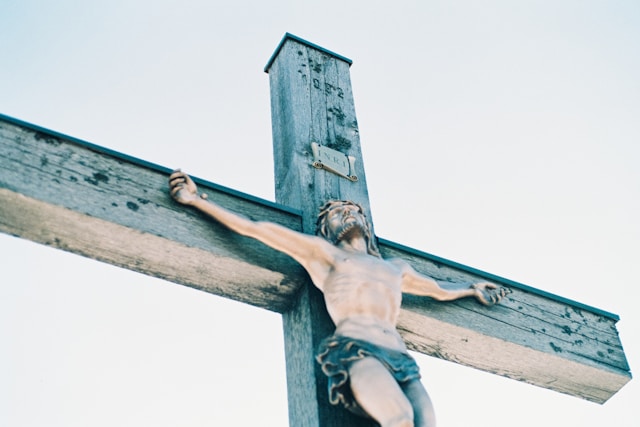 But before we understand the good news, we have to understand the bad news. All of us are sinners, and there is nothing inside us that can earn or merit salvation. Nobody dials 911 until they are in danger, and nobody gets serious about salvation until they know they are a sinner who needs a Savior. The wonderful thing about salvation is that it is simple enough for a child to receive.
Four statements sum up what salvation is all about: God is righteous. We are unrighteous. God demands righteousness. And God has provided righteousness for us in the death of His Son, the Lord Jesus Christ. Those four statements tell us what salvation is about, but sometimes the best way to understand a spiritual truth is to see it in living color, in a real, live person.
One of the things we used to do in my home church was to share personal testimonies. Attend any gathering and you would hear stories of what God has done in people’s lives. Sometimes seeing what salvation does in a real, live person makes the profound truth of it far more understandable. That is exactly what Paul does in Romans 4.
He takes Abraham, the great hero of Israel, and shows us salvation wrapped around a real life. Abraham was known as God’s friend, and he had two families: a physical family, described in verse 1 as “our forefather according to the flesh,” and a spiritual family, described in verse 11 as the father “of all who believe” – meaning every one of us who has been saved. Abraham founded a nation by blood, and he founded a family of faith that stretches across every nation on earth. Using Abraham’s life, Paul answers three questions every one of us needs answered about salvation: What is it? When is it? Why is it?
I. We Receive Righteousness as Reckoned Riches (Romans 4:4-8)
 Paul explains it plainly in verses 4 and 5: “Now to the one who works, his wage is not credited as a favor, but as what is due. But to the one who does not work, but believes in Him who justifies the ungodly, his faith is credited as righteousness” (Romans 4:4-5, NASB). Salvation is not a paycheck. It is a gift.
We Cannot Earn It by Our Work.
If you work a job, you earn wages. Your check comes at the end of the week, and if a note came attached to it saying, “This is a gift from the kindness of my heart,” you would say, “This is not a gift. I worked for this. I put in the hours. I earned it.” That is how wages work. You have a right to demand what you have earned.
Salvation does not work that way. It is not something you work for that God hands you as payment. If people think they can work for salvation the way they work for a paycheck, what do they usually try? “I am going to do a lot of good things. I am going to treat my husband or wife well. I am going to be kind to my children. I am going to be a good neighbor. Whenever I see someone in need, I am not going to pass them by.” Every one of those is a genuinely good thing to do. But remember our four statements: God is righteous, we are unrighteous, God demands righteousness – and He demands it from the day we are born to the day we die, not merely from today forward. Working for salvation is never only a matter of doing good things; it is also a matter of never doing a single bad thing, because there is always a negative alongside the positive.
Suppose from this moment forward you did nothing but good – loved your spouse well, raised your children right, helped every neighbor in need, and never once failed. Suppose you could do that for the rest of your life. “Fine,” you might say, “then I can demand that God let me into heaven as payment for my good life.” But there is still one problem: yesterday, and the day before that, and the day before that. If God demands righteousness, He demands it for the whole of a life, not merely the part still ahead of us. None of us can undo yesterday. If working could save us, only a perfect life, start to finish, would qualify anyone to walk up and demand entrance into heaven.
Verse 5 tells us exactly who can be saved: “him who justifies the ungodly.” Put a few verses of Scripture together and you find out who that is. Jesus said He came to preach the gospel to the poor (Luke 4:18), to seek and save the lost (Luke 19:10), and that He came to call not the righteous, but sinners (Matthew 9:13). Put those three together and you get poor, lost sinners. That is the only kind of person who can be saved – and the good news is that is exactly what all of us are.
We Are Credited by Faith Alone.
Circle the word “credited” in verse 5. It is one of the most important words in the whole book of Romans, occurring eleven times in this chapter alone, translated “credited,” “reckoned,” and “imputed” throughout. It is a bookkeeping word. It means to calculate, to put down on the books, to deposit into an account.
Salvation is a bookkeeping transaction. God keeps books. He has a Book of Life, in which every person’s name is written the moment they are born. He also has the Lamb’s Book of Life, in which a name is added the moment a person is saved, written in the precious blood of Jesus Christ. My name went into the Book of Life the day I was born, and into the Lamb’s Book of Life the day I was saved at nine years old.
God also keeps a book of our deeds, and it is not a good record. We live in a day of computers, and computers keep records of everything we do. Somewhere there is likely a record of everything you have ever done. Multiply that by infinity and you have some idea of the record God keeps. It shows that we were born with a sinful nature. It records the first time we chose to sin, and every fault, every failure, every sin, and every transgression since. It is all there, and it is not a good record. Then Jesus came. He lived a life we could not live and died a death we could not die. When He hung on the cross, God placed every one of our sins on His record instead. The moment we repent and trust what Christ did at Calvary, God writes “paid in full” over our account and credits us with the righteousness of Jesus Christ.
Abraham is the illustration. He was Israel’s great founder – if anyone was ever saved, surely it was Abraham. What would be the rough equivalent for us today? Perhaps we would say, “If anybody was ever saved, it was certainly a man like Billy Graham.” The way Billy Graham got to heaven is the way every one of us has to go. That is exactly how the Jews of Paul’s day thought of Abraham – their great example, their model of a saved man. He was not saved because of what he did. His record was not even that good; he came from a family of idol worshipers, and Scripture records at least one lie he told. Verse 3 says it plainly: “Abraham believed God, and it was credited to him as righteousness” (Romans 4:3, NASB). God had promised him descendants as numerous as the stars. Abraham simply believed the promise, and in that moment God credited it to him as righteousness. His works had nothing to do with it.
We are saved the same way Abraham was, by trusting the promise of God, except we look back to a promise fulfilled rather than forward to a promise made. That is what Christmas is about – the fulfillment of the promise that God would send the Savior. When the Philippian jailer asked, “What must I do to be saved?” the answer was simple: “Believe in the Lord Jesus, and you will be saved” (Acts 16:31, NASB). That is how everybody is saved.
We Are Cleared of Every Charge.
Paul’s second illustration is David, Israel’s great king, in Romans 4:6-8. David’s record was not good either – he was a murderer and a liar with nothing to offer God as payment. When David sought God’s forgiveness, he did not come demanding what he deserved. He came asking for mercy: “Be gracious to me, O God” (Psalm 51:1, NASB). Having received that mercy, he rejoiced in Psalm 32: “How blessed is he whose transgression is forgiven, whose sin is covered!” (Psalm 32:1, NASB). David deserved judgment, and instead he received blessing.
That is what salvation does. Our iniquities are forgiven and put away entirely. Our sins are covered – and in the Old Testament, “covered” means covered until Calvary. God will not take our sin into account. It is as if we had never sinned at all. Isn’t that marvelous? There is no record in heaven that we have ever sinned.
I read once about a man whose Rolls Royce needed a repair so specialized that the company flew a mechanic over from England to fix it. He braced himself for a massive bill. It never came. He finally wrote and asked for it, and the company wrote back: “We have no record that car has ever had a problem.” That is what God says about us the moment we are saved – not “your account is settled,” but “there is no record you ever sinned.” An old hymn puts it this way: “There was a time I know when in the book of heaven, an old account was standing, and I was not forgiven… but I went unto the Keeper, and settled long ago… and the record is clear today, for He washed my sins away.”
II. We Rely on Redemption before Any Ritual (Romans 4:9-12)
 Many of the Jews in Paul’s day believed a person had to be circumcised to be saved. In verses 9 through 12, Paul settles the question by asking when Abraham was actually circumcised.
We Are Saved before We Are Sealed.
Genesis 17 tells us Abraham was circumcised fourteen years after he believed God and was credited with righteousness back in Genesis 15. There is no question about it – Abraham was saved before he was circumcised. His circumcision came afterward, as a sign pointing to his salvation and a seal confirming it. Paul makes the point in verse 11 so that Abraham could be the father of all who believe without being circumcised, and just as truly the father of those who are circumcised but who also walk in the same steps of faith Abraham walked in while he was still uncircumcised.
If you want to understand what this means for us, substitute the word “baptism” for “circumcision.” Baptism is the first thing a believer should do after receiving Christ, and the same question applies to us: were you saved before your baptism, or after it? Circumcision was a sign and a seal for Abraham; baptism is a sign and a seal for us. A sign points to something. A seal authenticates it. Neither one creates the thing it points to.
We Show Our Salvation through the Sign.
I am not talking about people who have done it out of order – who were baptized first and later came to genuine faith, and who now rightly want to be baptized again as believers. That is exactly what should happen. But if you were baptized before you ever trusted Christ, all that happened is you got wet. Baptism means nothing unless it is a true indication of what has already happened inside you. You are not saved because you are baptized; you are baptized because you are saved. The moment you receive Christ, you ought to follow Him in believer’s baptism, joining a church and identifying publicly with Him.
A wedding ring does not make a couple married – it confirms that they already are. A man does not stand up in a jewelry store, slide a ring onto his finger, and become a husband. He is married first, in the moment vows are exchanged, and the ring afterward becomes the visible, ongoing sign of what already took place. Baptism works exactly the same way for us. It does not marry us to Christ; it shows the world that we already belong to Him.
III. We Resolve to Rest Rather than Run (Romans 4:13-15)
 Verses 13 through 15 tell us why salvation works the way it does. Paul says the promise that Abraham would be heir of the world did not come through the law, but through faith. All the law can ever do, verse 15 tells us, is bring wrath. The law shows us we are sinners in need of a Savior; it was never able to save us. That is why good works cannot get the job done. We are not saved by trying. We are saved by trusting the promise God has made.
We Take the Trying Road to Wrath.
There are only two roads a person can walk trying to reach heaven. The first is the trying road – trying to keep the law, trying to do enough good, trying to outweigh the bad with the good, trying to be sincere enough or religious enough or moral enough. Verse 15 tells us exactly where that road ends: the law, works, and wrath. The law was never given as a ladder to climb into heaven. All the law can ever do is hold up a mirror and show us how far short we fall, which is exactly what the word “wrath” means here – not that the law makes us sinners, but that it exposes the sin already there. No matter how sincerely or how hard a person tries, that road never arrives at heaven’s door. It only arrives at a clearer view of how much we needed a Savior all along.
We Take the Trusting Road to Heaven.
The other road is the trusting road, described in verse 12 as walking “in the steps of the faith” our father Abraham had while he was still uncircumcised (Romans 4:12, NASB). Which road are we on?
Let me put it as plainly as I can. Imagine you are on an airplane, and the person beside you is reading a newspaper when the pilot radios that the plane is going down – certain death in a matter of seconds. That person turns to you, terror on his face, and says, “Excuse me, sir – I know I am about to die. Could you tell me how to be saved?”
Any plan of salvation you propose has to work for a man like that, or it is no plan at all. You cannot tell him, “Go be a good husband, be kind to your children, help the poor, and it will all work out over time.” There is no time left to do any of that, and he knows it. He is not asking for a self-improvement plan. He is asking, in the space of a few seconds, how a guilty man can stand before a holy God. If the plan we offer needs decades to complete, it is not really a plan for salvation at all – it is simply another form of trying. He needs an answer right now, one that can be trusted the instant it is believed. Here it is: the Bible says all have sinned and fall short of the glory of God. None of us deserves heaven. But God sent His Son, the Lord Jesus Christ, who died on the cross to pay for our sin. If, this moment, you ask God to forgive you and invite Jesus Christ into your heart as your personal Savior, you can be saved right now.
That is the plan that will save a man riding an airplane down to his death, and it is the very same plan that will save you and me sitting comfortably in our seats. We are not so different from that man – every one of us is a heartbeat away from eternity, whether the danger is as obvious as a falling plane or as quiet as an ordinary Tuesday. The good news that reaches him in his last seconds is the same good news that reaches us right now: not a lifetime of trying, but a single moment of trusting. Perhaps you have already trusted Christ. If so, this is simply good news worth remembering – your name has already been written in the Lamb’s Book of Life, your account has already been settled, and there is no record in heaven that you have ever sinned. Rest in that. But if you have never made that decision, there is no better moment than this one. Salvation was never meant to be complicated. It is not a lifetime of trying to earn what only God can give. It is a single moment of trusting the promise He has already made. Wouldn’t you like to know Jesus as your Savior today?